
What Is a Tune-Up and Does My Modern Car Still Need One?
A tune-up is a general term for maintenance intended to keep an engine running properly, but modern cars usually do not need the same traditional tune-ups that older vehicles required. Instead, modern vehicles typically need specific maintenance services at intervals recommended by the manufacturer, such as spark plug replacement, filter replacement, fluid service, and inspections based on the vehicle’s age, mileage, condition, and maintenance schedule.
What Is a Car Tune-Up?
Traditionally, a tune-up involved adjusting or replacing several components that affected how an engine operated.
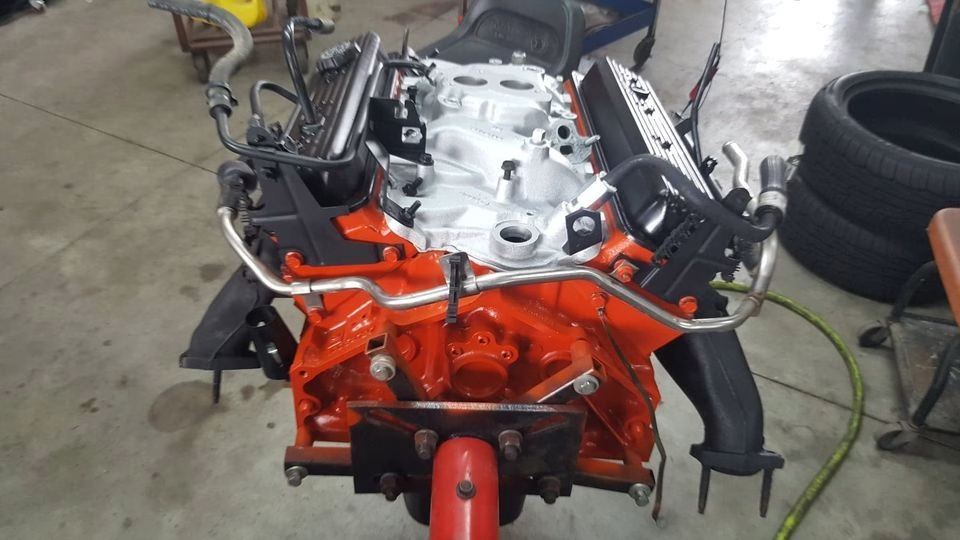
Older vehicles often used mechanical ignition and fuel-system components that required periodic adjustment. As automotive technology changed, electronic ignition, fuel injection, onboard computers, and advanced sensors reduced or eliminated many traditional adjustment procedures.
Today, the term “tune-up” is often used more broadly to describe preventive engine maintenance.
Depending on the vehicle and its maintenance needs, this could involve inspecting or servicing components related to ignition, airflow, fuel delivery, fluids, filters, and overall engine performance.
There is no universal modern tune-up package that is correct for every vehicle.
Does My Modern Car Still Need a Tune-Up?
Your modern car still needs regular maintenance, but it may not need a traditional tune-up in the old-fashioned sense.
Modern vehicles are designed with electronic engine management systems that automatically control functions such as fuel delivery and ignition timing. Many adjustments that were once performed manually are now handled electronically.
However, components still wear out, fluids deteriorate, and filters become dirty.
The best approach is to follow the maintenance schedule provided by your vehicle manufacturer rather than automatically requesting the same tune-up services at a fixed interval.
What Does a Modern Tune-Up Include?
What people call a modern tune-up can vary depending on the vehicle.
A technician may review the vehicle’s maintenance history and condition to determine which services are actually due.
Spark Plug Inspection or Replacement
Spark plugs create the spark needed to ignite the air-fuel mixture inside gasoline engines.
Over time, spark plugs can wear and may eventually need replacement. Replacement intervals vary significantly depending on the vehicle and type of spark plug.
Rather than using one mileage interval for every car, check the maintenance schedule in your owner’s manual.
Air Filter Inspection
The engine air filter helps prevent dirt and debris from entering the engine.
A restricted filter can affect airflow and should be replaced when necessary. Replacement needs can vary based on the vehicle and driving environment.
Fluid Checks
Modern vehicle maintenance can include checking important fluids and determining whether any are due for service according to the manufacturer’s recommendations.
Depending on the vehicle, these can include engine oil, coolant, brake fluid, transmission fluid, and other vehicle-specific fluids.
Not every fluid needs replacement during every maintenance visit.
Belts and Hoses
Belts and hoses can deteriorate with age, heat, mileage, and operating conditions.
An inspection can look for visible cracking, leaks, deterioration, or other signs that a component may require attention.
Ignition System Inspection
Modern ignition systems commonly use electronic components such as ignition coils.
If your vehicle has symptoms such as misfiring, rough running, hesitation, or a check engine light, diagnostic testing may be needed rather than simply replacing ignition parts as part of a routine tune-up.
Diagnostic and Performance Checks
If the vehicle is not running normally, a technician may use diagnostic equipment to retrieve trouble codes and examine vehicle data.
However, diagnostic testing and routine maintenance are not necessarily the same thing.
If a warning light or drivability problem is present, the goal should be to diagnose the actual fault rather than assume a tune-up will automatically solve it.
How Do I Know If My Car Needs Maintenance?
The most reliable starting point is your vehicle’s manufacturer-recommended maintenance schedule.
Your owner’s manual or manufacturer maintenance information can identify services based on mileage, time, and sometimes driving conditions.
You should also pay attention to changes in how your vehicle operates.
Possible signs that your vehicle needs inspection or maintenance include:
-
Rough idling
-
Difficulty starting
-
Engine hesitation
-
Reduced acceleration
-
Poor fuel economy
-
Engine misfires
-
Unusual noises
-
Warning lights
-
Unusual vibration
-
Stalling
-
Maintenance reminders
These symptoms do not automatically mean your vehicle needs a tune-up. They may indicate a specific problem that requires diagnosis.
Can a Tune-Up Fix a Check Engine Light?
Not necessarily.
A check engine light means the vehicle’s computer has detected a fault. The problem could involve ignition, fuel delivery, emissions equipment, sensors, wiring, or another monitored system.
Replacing spark plugs or filters without determining why the warning light appeared may not solve the problem.
Diagnostic trouble codes can provide useful clues, but additional testing may be needed to identify the underlying cause.
If your check engine light is on, professional diagnosis is generally more appropriate than assuming the vehicle simply needs a tune-up.
Can a Tune-Up Improve Poor Acceleration?
Maintenance can help when poor acceleration is related to an overdue maintenance item, but weak acceleration can have many causes.
Possible problems can involve:
-
Ignition components
-
Fuel delivery
-
Air intake
-
Engine sensors
-
Exhaust restrictions
-
Transmission issues
-
Mechanical engine problems
If your vehicle suddenly loses power or hesitates when accelerating, diagnosis can help determine the actual cause before parts are replaced.
How Often Does a Modern Car Need a Tune-Up?
There is no single tune-up interval that applies to every modern vehicle.
Maintenance requirements vary based on the vehicle’s:
-
Make and model
-
Engine
-
Age
-
Mileage
-
Maintenance history
-
Driving conditions
-
Manufacturer recommendations
Some components can last much longer in modern vehicles than similar parts did in older cars.
Instead of following a generic recommendation such as getting a tune-up every certain number of miles, follow the maintenance intervals specified for your particular vehicle.
Is Preventive Maintenance Different From a Tune-Up?
Yes, although the terms are sometimes used interchangeably.
A tune-up generally refers to engine-related maintenance, while preventive maintenance is broader.
Preventive maintenance can include services and inspections involving the engine, brakes, tires, fluids, filters, steering, suspension, cooling system, and other vehicle components.
The purpose is to address scheduled maintenance and identify developing problems before they become more significant.
For modern vehicles, following a complete preventive maintenance schedule is usually more useful than relying only on the traditional idea of a tune-up.
When Should I Contact a Professional?
Consider having your vehicle inspected when maintenance is due or when you notice changes in performance.
Professional attention may be appropriate if:
-
Your vehicle is due for manufacturer-recommended maintenance
-
The check engine light is on
-
The engine runs roughly
-
The vehicle hesitates during acceleration
-
Fuel economy has noticeably changed
-
The engine is difficult to start
-
The vehicle repeatedly stalls
-
You notice unusual noises or vibration
-
You are unsure about the vehicle’s maintenance history
A technician can review the vehicle’s condition and maintenance needs rather than performing unnecessary services based on a generic tune-up package.
How Workhorse Automotive Can Help
Workhorse Automotive provides auto repair services in Wichita, Kansas. If you are unsure whether your vehicle needs maintenance or if a performance problem needs diagnosis, a professional inspection can help identify the appropriate next step.
Modern vehicles have different maintenance requirements based on their design, mileage, condition, and manufacturer recommendations. Instead of assuming every vehicle needs the same tune-up, the goal should be to identify which maintenance services or repairs are actually appropriate for your car.
Contact Workhorse Automotive to discuss your vehicle’s auto repair and maintenance needs.
Auto Maintenance in Wichita, Kansas
Workhorse Automotive is located at 1127 S West St, Wichita, Kansas 67213.
Wichita drivers can help keep their vehicles operating properly by following manufacturer-recommended maintenance and paying attention to changes in vehicle performance.
If you recently purchased a used vehicle, do not know its maintenance history, or have noticed new performance symptoms, an inspection can help determine what maintenance or repairs may be needed.
Frequently Asked Questions
Do newer cars need tune-ups?
Newer cars generally do not require traditional tune-ups in the same way older vehicles did, but they still require scheduled maintenance. Spark plugs, filters, fluids, belts, and other components may need inspection or replacement at vehicle-specific intervals. Follow the maintenance schedule recommended for your particular make, model, and engine.
What are the signs that my car needs a tune-up?
Rough idling, hesitation, difficulty starting, reduced performance, poor fuel economy, or misfires can indicate that maintenance or repairs are needed. However, these symptoms do not automatically mean a tune-up will solve the problem. Diagnostic testing may be necessary to determine the actual cause.
How often should spark plugs be replaced?
Spark plug replacement intervals vary considerably between vehicles and spark plug types. Some are designed to last much longer than others. Rather than using a universal mileage recommendation, check your vehicle’s owner’s manual or manufacturer maintenance schedule for the correct interval.
Will a tune-up make my car run better?
It can if the vehicle has overdue maintenance items that are affecting performance. However, problems such as hesitation, misfires, power loss, or warning lights may require specific repairs rather than routine maintenance. Proper diagnosis can determine whether maintenance or another repair is needed.
Is a tune-up the same as an oil change?
No. An oil change replaces the engine oil and typically the oil filter. A tune-up is a broader term commonly associated with engine maintenance, while modern vehicle maintenance may involve several services performed at different intervals. Your manufacturer’s maintenance schedule is the best guide for determining what your vehicle needs.
If you are wondering whether your vehicle still needs a tune-up, contact Workhorse Automotive in Wichita, Kansas. A professional evaluation can help determine which maintenance services are appropriate for your vehicle based on its condition and maintenance needs.