What Does Routine Auto Maintenance Include?
Routine auto maintenance includes scheduled inspections and services that help keep your vehicle operating properly and can identify developing problems. Depending on your vehicle, this may include oil and filter changes, tire care, brake inspections, fluid checks, battery checks, filter replacement, and inspections of belts, hoses, steering, suspension, and other components. The exact maintenance schedule should be based on your vehicle manufacturer’s recommendations.
What Does Routine Auto Maintenance Include?
Routine maintenance is not one single service. It is a combination of inspections, fluid services, and component replacements performed at appropriate intervals.
Modern vehicles have different maintenance requirements based on their make, model, engine, mileage, age, and operating conditions. That is why the owner’s manual or manufacturer maintenance schedule should be the starting point.
Common routine maintenance items can include:
-
Engine oil and oil filter changes
-
Tire pressure and condition checks
-
Tire rotation when appropriate
-
Brake inspections
-
Fluid level and condition checks
-
Engine air filter replacement
-
Cabin air filter replacement
-
Battery and charging-system checks
-
Belt and hose inspections
-
Steering and suspension inspections
-
Spark plug replacement at the recommended interval
-
Cooling-system maintenance
-
Other manufacturer-specified services
Not every vehicle needs all of these services at every visit.
Engine Oil and Oil Filter Changes
Engine oil lubricates moving engine components and helps manage heat and contamination. Over time, the oil and filter need to be replaced.
The correct oil-change interval depends on the vehicle, oil specification, operating conditions, and manufacturer recommendations.
Instead of automatically following a generic mileage interval, check your owner’s manual or maintenance information for your specific vehicle.
Regularly checking the oil level can also help identify low oil before it contributes to engine problems.
Tire Inspection and Maintenance
Your tires directly affect handling, braking, ride quality, and traction.
Routine tire care may include checking:
-
Tire pressure
-
Tread depth
-
Uneven wear
-
Cracks or visible damage
-
Bulges or other abnormalities
Tire rotation may also be recommended at certain intervals to help promote more even wear.
Uneven tire wear can sometimes indicate alignment, suspension, inflation, or other issues that deserve further inspection.
Brake Inspections
Your braking system should be inspected periodically and whenever you notice changes in braking performance.
An inspection may include checking brake pads or shoes, rotors or drums where applicable, brake fluid condition, and other braking components.
Warning signs that deserve attention include:
-
Squealing or grinding noises
-
Vibration while braking
-
A change in brake pedal feel
-
Pulling during braking
-
Reduced braking performance
-
Brake warning lights
Brake components wear at different rates depending on the vehicle and driving conditions, so there is no single replacement interval that applies to every driver.
Fluid Checks and Maintenance
Vehicles use several fluids to operate different systems.
Depending on your vehicle, routine maintenance may involve checking fluids such as:
-
Engine oil
-
Engine coolant
-
Brake fluid
-
Transmission fluid
-
Power steering fluid, where applicable
-
Windshield washer fluid
Some fluids require periodic replacement, while others may primarily need inspection unless the manufacturer specifies a service interval.
Fluid type and maintenance requirements vary between vehicles. Always use the correct specifications for your particular make and model.
Engine Air Filter Replacement
The engine air filter helps prevent dirt and debris from entering the engine through the air intake.
A dirty or restricted filter may need replacement.
How frequently this is necessary depends on the vehicle, manufacturer recommendations, and driving environment. Vehicles frequently driven in dusty conditions may require different inspection intervals than vehicles operated in cleaner environments.
Cabin Air Filter Replacement
The cabin air filter helps filter air entering the passenger compartment through the heating and air-conditioning system.
As the filter collects dust and debris, airflow through the climate-control system may become restricted.
Replacement intervals vary, so follow the recommendations for your particular vehicle.
Battery Inspection
Your battery supplies electrical power needed to start the vehicle and supports electrical systems.
Routine maintenance can include inspecting the battery and connections for visible corrosion, damage, or other problems. Testing may also help evaluate battery and charging-system performance when appropriate.
Possible signs of battery or charging problems include:
-
Slow engine cranking
-
Difficulty starting
-
Dim or unusual lighting behavior
-
Electrical problems
-
Battery or charging warning lights
A starting problem does not automatically mean the battery is bad, so testing can help identify the actual cause.
Belts and Hoses
Belts and hoses operate in demanding conditions involving heat, vibration, pressure, and repeated use.
Over time, they can deteriorate.
Routine inspection can look for:
-
Cracking
-
Fraying
-
Leaks
-
Swelling
-
Visible deterioration
-
Unusual wear
Replacement intervals and component designs vary between vehicles, so follow manufacturer recommendations when applicable.
Steering and Suspension Inspections
Steering and suspension components affect vehicle control, handling, comfort, and tire contact with the road.
These systems may need inspection when routine maintenance is performed or when symptoms develop.
Possible warning signs include:
-
Vehicle pulling to one side
-
Uneven tire wear
-
Excessive bouncing
-
Unusual noises over bumps
-
Steering wheel vibration
-
Changes in handling
These symptoms can have several possible causes, so professional inspection can help determine the source.
Spark Plugs and Ignition Components
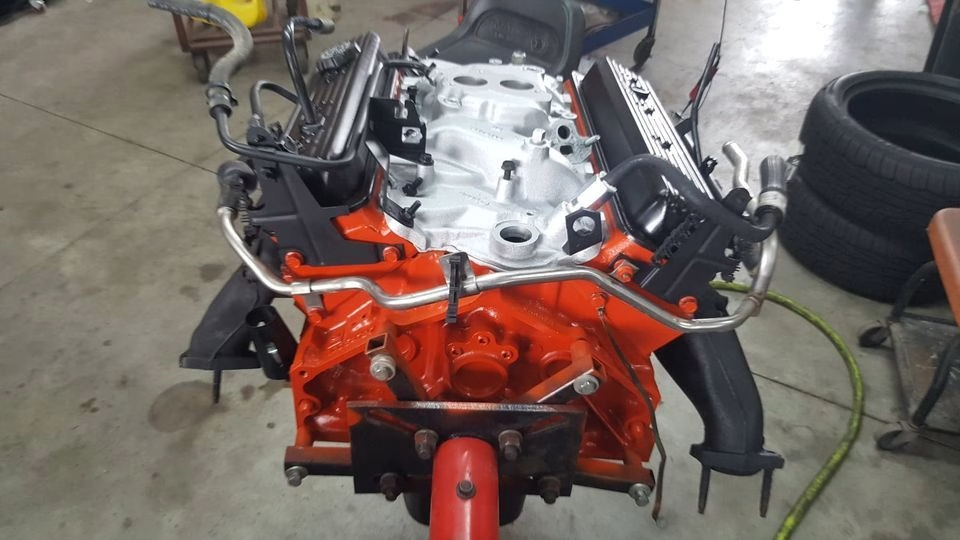
Gasoline engines use spark plugs to ignite the air-fuel mixture.
Spark plugs eventually wear and may need replacement according to the manufacturer’s maintenance schedule.
Replacement intervals vary significantly between vehicles and spark plug types.
If your engine begins misfiring, hesitating, running roughly, or displaying a check engine light, diagnosis may be needed instead of simply replacing spark plugs.
Cooling System Maintenance
The cooling system helps regulate engine operating temperature.
Routine maintenance may include checking coolant level and condition, inspecting hoses and other visible components, and replacing coolant when recommended by the manufacturer.
Cooling-system problems should not be ignored. An overheating engine can suffer significant damage if operation continues.
If your temperature warning appears or the engine begins overheating, safely stop driving when appropriate and seek professional assistance.
How Often Should Routine Auto Maintenance Be Done?
There is no single maintenance schedule that works for every vehicle.
Maintenance intervals depend on factors such as:
-
Vehicle make and model
-
Engine type
-
Vehicle age
-
Mileage
-
Driving conditions
-
Maintenance history
-
Manufacturer recommendations
Some vehicles may also have different maintenance schedules for normal and severe operating conditions.
Your owner’s manual or manufacturer maintenance schedule is the most appropriate source for determining when specific services are due.
Why Is Routine Auto Maintenance Important?
Routine maintenance can help keep important vehicle systems operating as intended and provide opportunities to identify wear, leaks, damage, or other developing problems.
It can also help you stay aware of your vehicle’s overall condition.
Maintenance cannot prevent every mechanical failure, but ignoring scheduled services can allow certain problems to become more serious.
Keeping records of completed maintenance can also make it easier to know which services have already been performed and which ones may be approaching.
When Should I Contact a Professional?
You do not have to wait for a scheduled maintenance interval if your vehicle begins behaving differently.
Consider having your vehicle inspected if you notice:
-
A check engine or other warning light
-
Unusual noises
-
Fluid leaks
-
Difficulty starting
-
Rough idling
-
Engine hesitation
-
Reduced acceleration
-
Steering problems
-
Shaking or vibration
-
Changes in braking performance
-
Overheating
-
Unusual odors or smoke
These symptoms may indicate a problem that requires diagnosis rather than routine maintenance alone.
How Workhorse Automotive Can Help
Workhorse Automotive provides auto repair services in Wichita, Kansas. If you are unsure what maintenance your vehicle needs, reviewing its mileage, maintenance history, current condition, and manufacturer recommendations can help determine the appropriate next steps.
Routine maintenance should be based on what your specific vehicle actually requires rather than a one-size-fits-all service schedule.
If you have questions about your vehicle’s maintenance or notice a problem that needs attention, contact Workhorse Automotive to discuss your auto repair needs.
Routine Auto Maintenance in Wichita, Kansas
Workhorse Automotive is located at 1127 S West St, Wichita, Kansas 67213.
Wichita drivers can help keep track of vehicle maintenance by following manufacturer recommendations and paying attention to changes in performance.
Whether your vehicle is approaching a scheduled service interval or you are unsure about its previous maintenance history, a professional inspection can help identify maintenance items or mechanical concerns that deserve attention.
Frequently Asked Questions
What is the most important routine car maintenance?
There is no single maintenance item that replaces all others. Engine oil service, tire care, brake inspections, fluid maintenance, and other manufacturer-recommended services all play important roles. The best approach is to follow the maintenance schedule for your specific vehicle and address warning signs when they appear.
How often should I get my car serviced?
Service intervals vary by make, model, engine, mileage, and operating conditions. Some maintenance items are required more frequently than others. Check your owner’s manual or manufacturer maintenance schedule rather than relying on one universal service interval for every vehicle.
Is an oil change the same as routine maintenance?
An oil change is an important routine maintenance service, but it is only one part of vehicle maintenance. Tires, brakes, filters, fluids, belts, hoses, steering, suspension, and other components may also require inspection or service at appropriate intervals.
Does my car need maintenance if there are no warning lights?
Yes. Warning lights generally indicate that a vehicle system has detected a problem; they are not a replacement for scheduled maintenance. Many routine services should be completed according to manufacturer recommendations even when the vehicle appears to operate normally and no dashboard warning lights are present.
What happens if I skip routine car maintenance?
The effects depend on which maintenance item is skipped and for how long. Neglected maintenance can contribute to excessive wear, reduced performance, or mechanical problems in certain systems. Following the manufacturer’s recommended schedule can help keep important maintenance items from being overlooked.
If you need help understanding what routine auto maintenance your vehicle may need, contact Workhorse Automotive in Wichita, Kansas. A professional evaluation can help determine appropriate maintenance based on your vehicle’s condition, mileage, history, and manufacturer recommendations.