What Happens If You Wait Too Long for an Oil Change?
If you wait too long for an oil change, the engine oil can become contaminated and less effective at lubricating and protecting internal engine components. Over time, neglected oil changes can contribute to increased friction, deposits, overheating, accelerated engine wear, and potentially serious engine damage. The correct oil-change interval depends on your specific vehicle and the manufacturer’s recommendations.
What Happens If You Wait Too Long for an Oil Change?
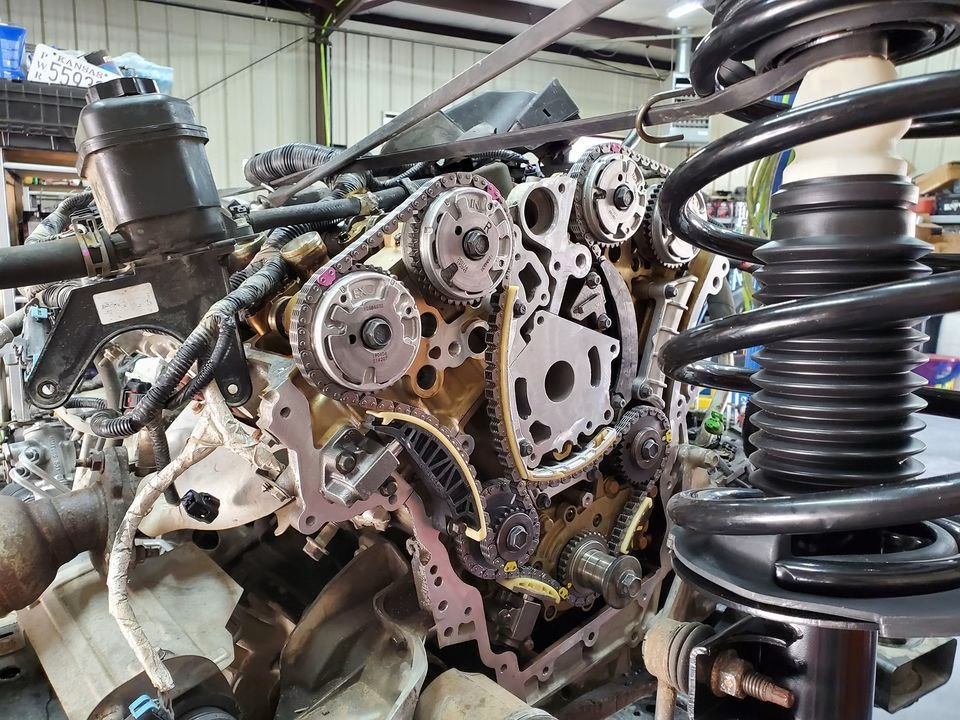
Engine oil works under high temperatures and demanding conditions. As it circulates through the engine, it lubricates moving components, helps control heat, carries contaminants toward the oil filter, and helps protect internal surfaces.
Oil does not remain in the same condition forever.
As mileage and time accumulate, the oil can become contaminated and its protective properties can decline. The oil filter also has a limited capacity to capture contaminants.
Waiting significantly beyond the recommended oil-change interval can make it harder for the oil to provide the protection your engine needs.
Why Does Your Engine Need Regular Oil Changes?
An engine contains many moving components operating at high speeds and temperatures. Proper lubrication helps reduce friction and wear between these components.
Engine oil performs several important jobs, including:
-
Lubricating moving engine components
-
Helping reduce friction and wear
-
Assisting with heat management
-
Suspending and carrying contaminants
-
Helping keep internal components cleaner
-
Supporting proper engine operation
Changing the oil and oil filter at appropriate intervals removes old oil and accumulated contaminants and replaces them with oil that meets the vehicle’s requirements.
What Can Happen When Engine Oil Gets Too Old?
Reduced Lubrication
One of engine oil’s most important functions is lubrication.
As oil ages and becomes contaminated, its ability to perform as intended can decline. Inadequate lubrication can increase friction between moving engine components.
Over time, increased friction can contribute to accelerated wear.
Sludge and Deposit Formation
Old or neglected engine oil can contribute to deposits and sludge inside an engine under certain conditions.
Sludge can interfere with proper oil circulation and may restrict passages that deliver lubrication to important components.
The severity depends on factors such as engine design, maintenance history, oil quality, operating conditions, and how far maintenance has been delayed.
Increased Engine Wear
When lubrication is inadequate, internal engine components may experience increased wear.
This does not mean that being slightly late for one oil change will automatically destroy an engine. However, repeatedly extending oil changes significantly beyond the recommended interval can increase the risk of long-term problems.
Higher Operating Temperatures
Engine oil contributes to heat management by carrying heat away from internal components.
If oil level is too low or the oil is no longer performing properly, the engine may experience additional heat and friction.
Overheating can also have many other causes, so a high engine temperature should be professionally diagnosed rather than automatically blamed on old oil.
Potential Engine Damage
Severe oil neglect can eventually contribute to significant internal engine damage.
In extreme cases, inadequate lubrication can damage bearings and other moving components or contribute to engine seizure.
Following the recommended maintenance schedule is much easier than dealing with major internal engine repairs caused by prolonged lubrication problems.
How Long Can You Go Past an Oil Change?
There is no universal number of miles or months that is safe for every vehicle.
Oil-change intervals vary based on:
-
Vehicle make and model
-
Engine design
-
Required oil type and specification
-
Mileage
-
Vehicle age
-
Driving conditions
-
Maintenance history
-
Manufacturer recommendations
Some modern vehicles have oil-life monitoring systems that calculate or estimate when service is needed based on operating conditions.
The best approach is to follow the maintenance schedule or oil-life system specified for your particular vehicle rather than relying on a generic interval.
What Are the Signs You May Be Overdue for an Oil Change?
Being overdue does not always produce obvious symptoms. Your engine may appear to operate normally even when maintenance is due.
Possible indicators can include:
-
An oil-change or maintenance reminder
-
An illuminated oil-related warning
-
Oil that is below the proper level
-
Unusual engine noises
-
Changes in engine performance
-
A known maintenance interval that has passed
Oil color alone is not a reliable way to determine whether an oil change is due. Engine oil can darken during normal use as it holds contaminants in suspension.
Your vehicle’s maintenance schedule, mileage, time, and oil-life monitoring system are more useful guides.
Is an Oil Pressure Warning the Same as an Oil Change Reminder?
No.
An oil-change or maintenance reminder generally indicates that scheduled service is due based on the vehicle’s maintenance system.
An oil pressure warning light can indicate that the engine does not have adequate oil pressure. This can be much more serious.
If the oil pressure warning appears while driving, safely stop the vehicle as soon as practical and shut off the engine. Continuing to operate an engine with inadequate oil pressure can cause severe damage.
Do not assume that simply changing the oil will correct an oil pressure problem. The cause should be properly evaluated.
What If My Engine Oil Is Low?
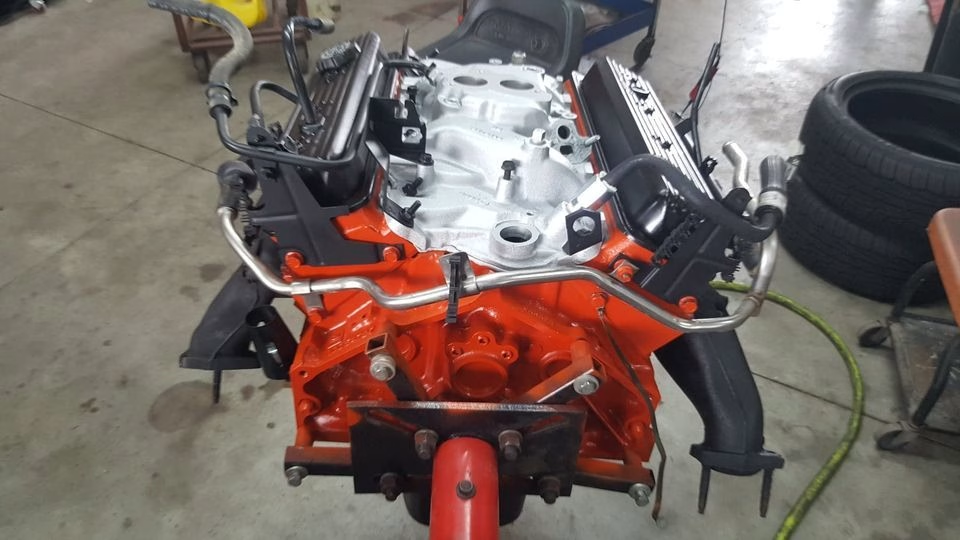
Low oil level and overdue oil are related but different issues.
An engine can have relatively fresh oil and still have a low oil level because of a leak, oil consumption, or another condition.
If the oil level is below the appropriate range, determine the correct oil specification and follow the vehicle manufacturer’s procedure for checking and adding oil.
If your vehicle repeatedly loses oil between services, have it inspected to determine why.
Can Waiting Too Long for an Oil Change Cause the Check Engine Light?
An overdue oil change does not automatically cause a check engine light.
The check engine light can illuminate for many reasons involving engine performance, emissions controls, sensors, ignition, fuel delivery, and other monitored systems.
Some engine conditions related to oil level, oil pressure, or oil-controlled components can potentially contribute to warning lights or trouble codes, depending on the vehicle.
If your check engine light is on, diagnostic testing can help determine the actual cause.
Will an Oil Change Fix Engine Problems Caused by Old Oil?
It depends on the condition of the engine.
If maintenance is simply overdue and no damage has occurred, performing the appropriate oil and filter service gets the vehicle back on track with that maintenance item.
However, an oil change cannot reverse mechanical damage that has already occurred because of inadequate lubrication or severe neglect.
If the engine is making unusual noises, showing an oil pressure warning, overheating, or operating poorly, additional diagnosis may be necessary.
When Should I Contact a Professional?
Consider professional service if your oil change is overdue or you are unsure when it was last performed.
You should seek more immediate assistance if you notice:
-
An oil pressure warning light
-
Very low engine oil level
-
Knocking or unusual engine noises
-
Visible oil leaks
-
Smoke
-
Engine overheating
-
Sudden changes in engine performance
-
Repeatedly declining oil levels
These symptoms can indicate issues beyond routine oil maintenance and may require diagnosis.
How Workhorse Automotive Can Help
Workhorse Automotive provides auto repair services in Wichita, Kansas. If your vehicle is overdue for maintenance or you are unsure about its oil-change history, a professional evaluation can help determine what attention the vehicle needs.
Oil requirements and service intervals vary between vehicles, so maintenance should be based on the correct oil specification and manufacturer recommendations for your particular vehicle.
If you notice an oil-related warning, leak, unusual engine noise, or another vehicle problem, contact Workhorse Automotive to discuss your auto repair needs.
Oil Change and Auto Maintenance in Wichita, Kansas
Workhorse Automotive is located at 1127 S West St, Wichita, Kansas 67213.
Wichita drivers can help protect their engines by keeping track of oil-change intervals and periodically checking engine oil levels according to their vehicle manufacturer’s instructions.
If you purchased a used vehicle and do not know when its oil was last changed, reviewing its available maintenance records and having its current maintenance needs evaluated can provide a useful starting point.
Frequently Asked Questions
Is it bad to go past your oil-change interval?
Going slightly past an interval does not automatically mean engine damage has occurred, but repeatedly or significantly delaying oil changes can increase the risk of deposits, inadequate lubrication, and engine wear. Follow your vehicle manufacturer’s recommended interval or oil-life monitoring system rather than routinely delaying service.
Can old engine oil damage my engine?
Severely neglected or degraded oil can contribute to increased friction, deposits, poor lubrication, and accelerated wear. Over a long enough period, inadequate lubrication can contribute to serious internal engine damage. The risk depends on the engine, oil level, maintenance history, operating conditions, and how long service has been neglected.
Can I just add oil instead of getting an oil change?
Adding oil and changing oil serve different purposes. Adding the correct oil can restore the level when it is low, but it does not remove old oil or replace the oil filter. If an oil change is due, adding oil alone does not replace the scheduled oil and filter service.
How do I know when my car needs an oil change?
Check your owner’s manual, manufacturer maintenance schedule, or vehicle oil-life monitoring system when equipped. The correct interval varies between vehicles and may depend on mileage, time, oil specifications, and operating conditions. Do not rely only on the appearance or color of the oil.
What should I do if my oil pressure light comes on?
An oil pressure warning can indicate inadequate oil pressure and should be treated seriously. Safely stop the vehicle as soon as practical and shut off the engine. Continuing to drive with inadequate oil pressure can cause severe engine damage. Have the cause evaluated before continuing normal operation.
If you have waited too long for an oil change or are unsure when your vehicle was last serviced, contact Workhorse Automotive in Wichita, Kansas. Addressing overdue maintenance and investigating any oil-related warning signs can help you determine the appropriate next step for your vehicle.